
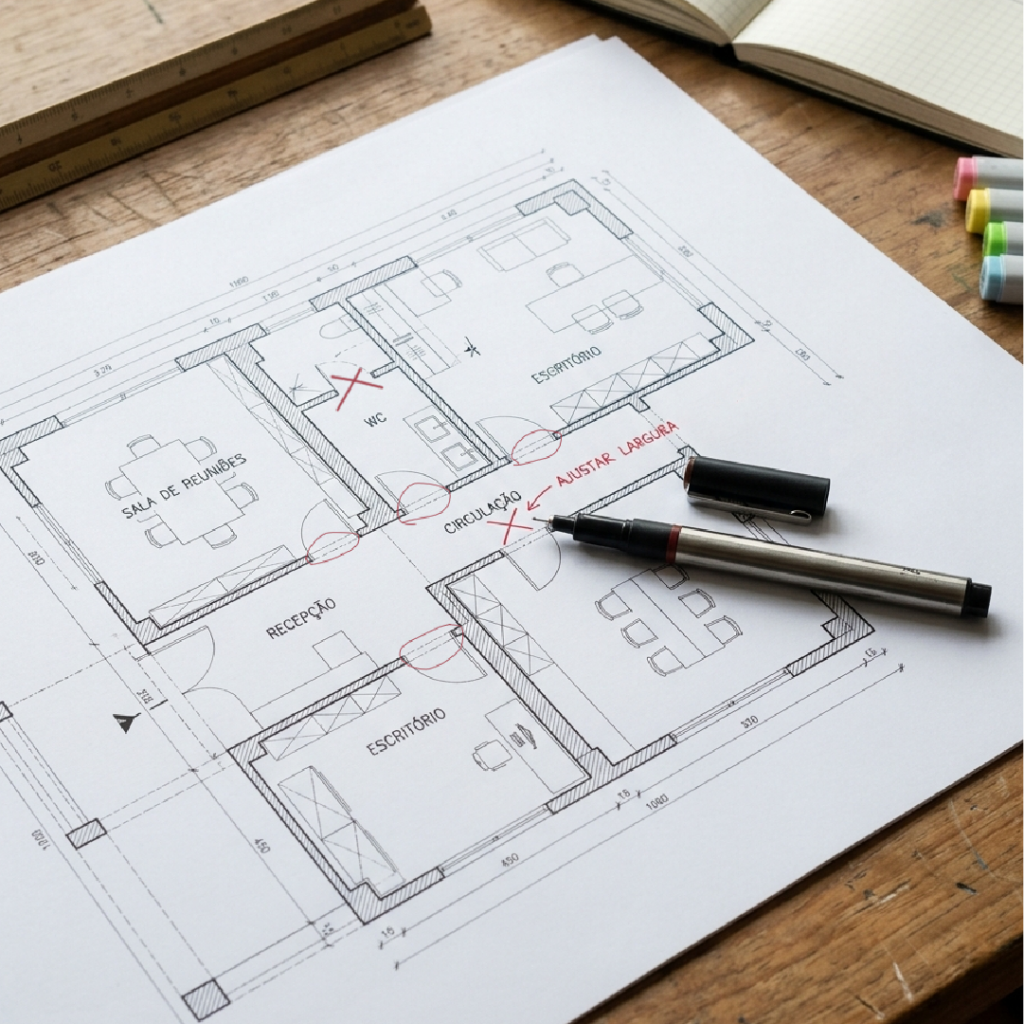
The design stage is where accessibility decisions have the greatest impact and the lowest cost of change. Solving an issue on paper costs a fraction of what it costs to solve it once construction is complete. This is not only a financial matter: it is also a matter of outcome. Solutions built in from the start tend to be more integrated, more functional and more durable than later adaptations.
But the design is only the beginning.
What happens after handover
A well-designed space can accumulate barriers over time without any refurbishment taking place. Furniture arrangements that compromise circulation as the work area becomes denser. Mats and personal belongings that end up in circulation routes. Space management systems, such as room booking or access control, that do not allow autonomous operation by every user profile.
Each of these problems arises from everyday use, and each of them requires active management to be identified and corrected.
Accessibility in the design: what to check
At design stage, the decisions with the greatest impact on accessibility are rarely the most obvious ones. The direction in which a door opens in relation to the most likely approach route, the height of switches, controls and equipment for use by people standing and seated, the relationship between the tactile paving specified in the design and the elements built or added later. All of this must be analyzed together.
Accessibility in management: what to monitor
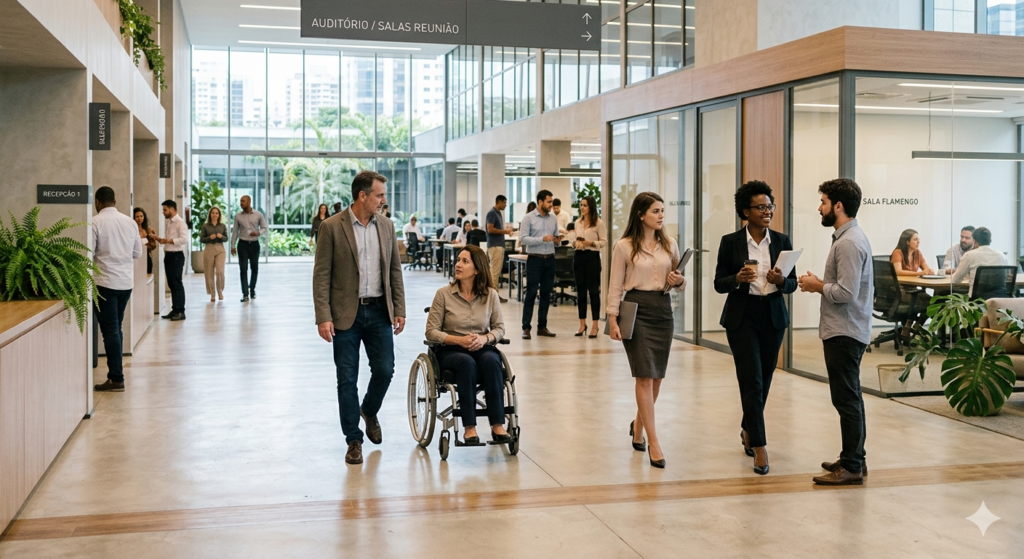
After handover, accessibility management needs to consider: is circulation free of everyday obstacles? Does the furniture preserve accessible routes even as occupancy becomes denser? Do the digital space management systems offer alternatives to touchscreens? Are new employees aware of the accessibility protocols?
These questions need to be asked regularly, because the space and the people who occupy it are in constant movement.
The role of technical follow-up
During the Maintenance Phase of the Guiaderodas Certification, the certified site can submit its refurbishment, retrofit, layout change and use reconfiguration projects to the architecture team for analysis. This proximity ensures that future interventions remain consistent with the conditions achieved at certification, and avoids unnecessary spending and rework.
Accessibility begins in the design and continues in the way the space is managed and used over time.

Make accessibility a decision, not a detail
Design decides what is possible. Management decides what survives.
The Guiaderodas Certification goes beyond a technical checklist. Its methodology combines a detailed assessment of the physical space, the lived experience of people with disabilities, staff training for an accessible attitude and a leadership commitment to continuous improvement.
Learn about the Guiaderodas Certification →