
Poverty and disability often go hand in hand, creating a cycle that is hard to break. People with disabilities face additional obstacles in education, work and access to basic services, which can lead to poverty. At the same time, conditions of poverty, such as malnutrition, lack of sanitation and inadequate healthcare, increase the risk of disabilities emerging or aggravate existing limitations. This text explores, in a balanced and constructive way, how disability and poverty are interlinked in a self-reinforcing cycle, presenting current data and examples to help understand this relationship both in Brazil and worldwide.
An interlinked reality in Brazil and around the world
More than one billion people worldwide live with some form of disability, around 15% of the global population. Globally, people with disabilities tend to have poorer access to healthcare, less education, lower economic participation and higher rates of poverty compared with those without disabilities. The situation is no different in Brazil. According to IBGE data, in 2019 approximately 8.4% of the Brazilian population aged 2 or over (around 17.8 million people) had some form of disability. The relationship between disability and poverty is evident in the statistics. Almost a fifth (18.2%) of people with disabilities in Brazil were living below the poverty line (less than US$5.50 a day) in 2019. That percentage is similar to the figure observed among the population without disabilities (around 22%). In extreme poverty (income below US$1.90 a day), the rates are practically identical (around 5%). This closeness in overall poverty rates is explained in part by age distribution: many people with disabilities are older, while poverty in Brazil particularly affects households with children. Even so, when we analyze aspects such as employment, income and access to services, a picture of disadvantage emerges for those with disabilities.
When disability increases the risk of poverty
Disability can, for various reasons, increase the risk of a person or family falling into poverty. One central reason is exclusion from the labor market. People with disabilities face lower rates of workforce participation and higher levels of unemployment. In Brazil, only 28.3% of working-age people with disabilities participated in the labor market, less than half the participation rate of people without disabilities (66.3%). The difficulty of entering formal employment is also greater: only 34.3% of workers with disabilities had formal jobs, against 50.9% among workers without disabilities. Even when employed, they usually earn lower wages. On average, people with disabilities earned around R$1,639 a month, while the average among people without disabilities was R$2,619. This income disparity reduces financial autonomy and can push many families into economic vulnerability.
Another factor is the difficulty of accessing quality education. Education is a crucial route to better employment and income opportunities, but children and young people with disabilities frequently face barriers from an early age. Whether through a lack of accessible schools, of trained professionals or of support resources (such as adapted materials, assistive technologies and sign language interpreters), many end up dropping out. In Brazil, fewer than half (48.3%) of young people with disabilities aged between 20 and 22 managed to complete secondary education, whereas among young people without disabilities that proportion reached 71%. This significant gap illustrates how a lack of educational inclusion limits future employment prospects and perpetuates the cycle of poverty.
Beyond work and education, difficulty in accessing basic health, transport and infrastructure services also contributes to the cycle. Many people with disabilities depend on regular medical care, rehabilitation or ongoing medication, needs that generate additional costs. Low-income families frequently cannot afford these costs, worsening health problems that could otherwise be controlled. Inaccessible or nonexistent public transport in certain regions prevents travel to schools, jobs or health treatment. The absence of urban infrastructure with ramps, tactile paving, adequate signage and other adaptations turns simple everyday activities (such as leaving home, catching a bus or going to the bank) into enormous challenges. With less mobility and autonomy, the economic and social opportunities of people with disabilities become even more restricted.
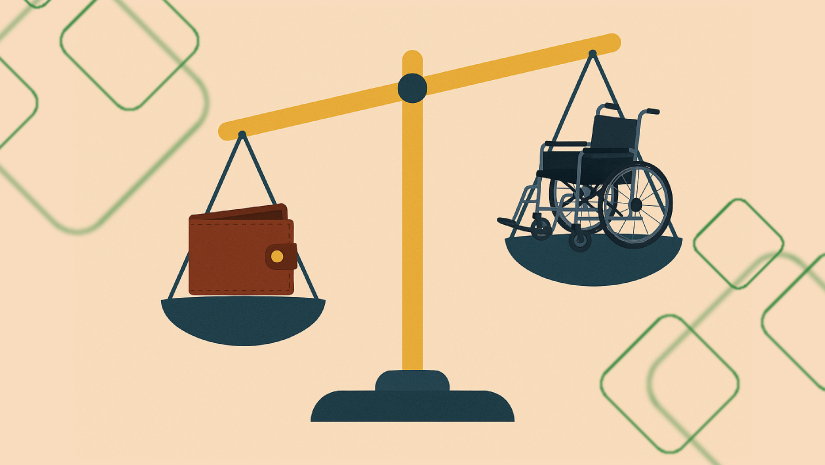
As if that were not enough, there are also extra costs associated with living with a disability, from equipment (such as wheelchairs, hearing aids and prostheses) to home adaptations. These items are often expensive and hard to obtain through the public system. A poor family with a member who has a disability may therefore face a dilemma: either bear the additional expense (further squeezing their income) or forgo these tools, which affects the person’s quality of life and their capacity for inclusion. In short, disability, without adequate support and inclusion, can push individuals and families into poverty, whether through loss of income, extra spending or the social exclusion it can bring about.

When poverty increases the incidence of disability
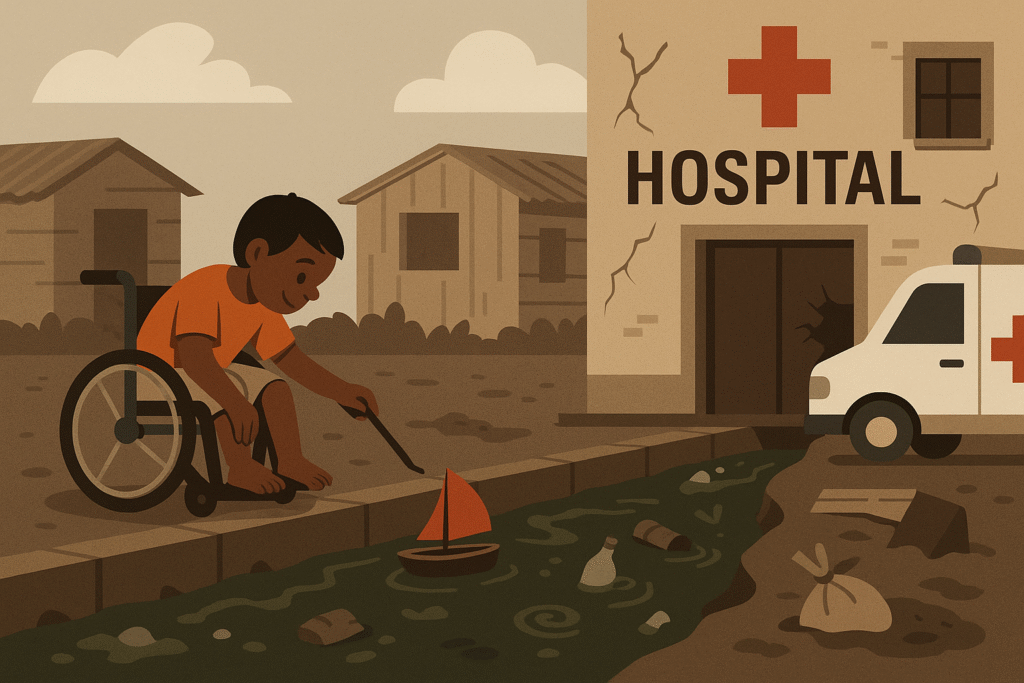
The other side of this vicious cycle is that poverty also contributes to an increase in cases of disability and to the worsening of existing limitations. The poorest sections of society are generally exposed to precarious living conditions that raise health risks. Problems such as malnutrition, lack of basic sanitation, contaminated water and unhealthy housing can lead to illnesses and disabilities that would otherwise be avoidable. For example, the lack of sanitation and of basic care can result in infections or inadequately treated illnesses, causing permanent disabilities (such as loss of vision or hearing, or physical limitations arising from untreated disease). According to the World Health Organization, 90% of people with moderate or severe vision loss live in developing countries, and a large proportion of those cases could have been prevented through simple medical or preventive interventions. This shows how problems linked to poverty, such as the absence of eye care or nutritional support, end up increasing the incidence of disability.
The lack of access to quality health services in poorer communities also means that many children do not receive vaccines or adequate care in early childhood, which can result in developmental disabilities. Similarly, informal workers or those in high-risk jobs (often the only options for the poorest) are more susceptible to accidents and injuries without proper protection, producing new cases of disability every year. Poverty also makes it harder to access information about health and prevention, which means chronic conditions (such as diabetes or hypertension) go uncontrolled and end up causing disabling complications, such as amputations or vision problems.
Another important dimension is that the poorer the family, the more limited its capacity to deal with a disability when it arises. Without resources, a disability that could be mitigated (for example, through surgery, physiotherapy or the use of appropriate devices) ends up becoming a permanent barrier. This creates a devastating effect: poverty generates the conditions for disability to emerge, and once it occurs, a family in extreme poverty has no means of providing rehabilitation or adaptations, entrenching that person’s disadvantage. In many cases, particularly in rural areas or isolated communities, the absence of accessible public services (clinics, rehabilitation centers, provision of orthoses and prostheses) means that people acquire a disability that could have been prevented or treated and end up living with it without any support.
In short, poverty acts as a cauldron of risk factors, environmental, health-related and social, that raise the probability of disability. This reality reinforces the cycle: poor communities tend to have higher rates of disability and, without intervention, this perpetuates those communities’ poverty. International bodies emphasize this link: people on low incomes, unemployed or living in unhealthy environments have a higher prevalence of disability than the rest of the population. Fighting poverty is therefore also preventing future disability, and vice versa.
Exclusion and lack of accessibility deepen inequalities
Social exclusion and the lack of accessibility act as fuel in this cycle of poverty and disability. When environments, whether physical, virtual or social, are not accessible, they automatically exclude a portion of the population, making it harder for people with disabilities to study, work, move around the city or even take part in community life. That exclusion generates deep inequalities.
A clear example is access to basic services. IBGE data shows that only 58.2% of people with disabilities in Brazil have simultaneous access to the three basic sanitation services (treated water, sewage and waste collection), while among people without disabilities that figure is slightly higher, at 62.4%. Similarly, home internet access, which is now fundamental for education, work and information, reaches only 68.8% of people with disabilities, compared with 86.1% among those without. These figures indicate that people with disabilities are concentrated in contexts of poorer infrastructure and access, deepening everyday exclusion.
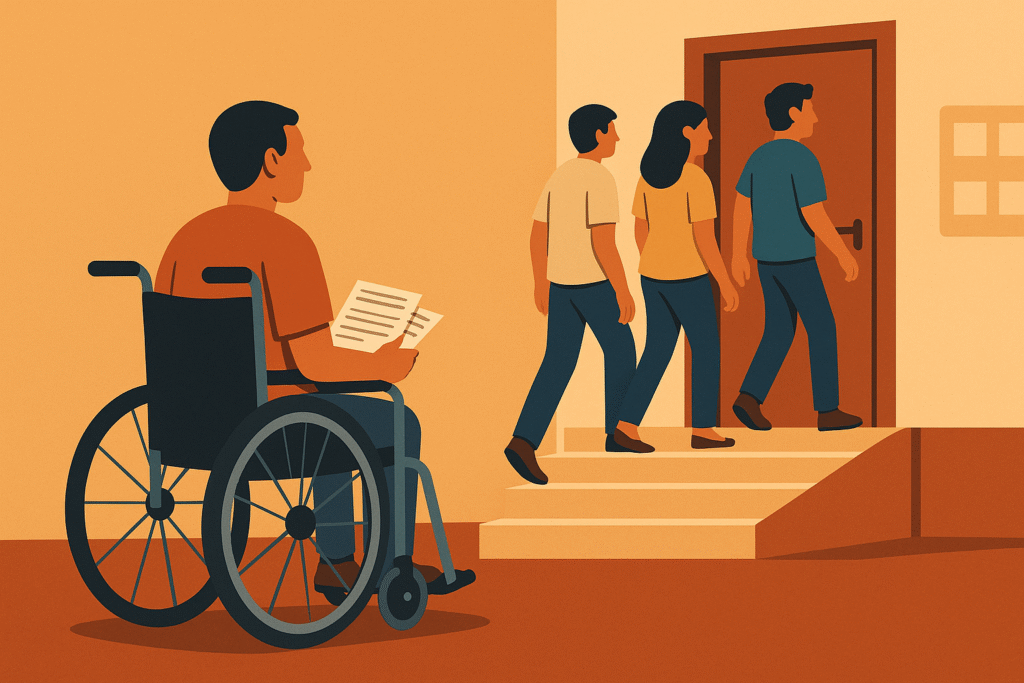
In transport and urban space, the lack of architectural accessibility and universal design limits mobility. Sidewalks without curb ramps or full of holes, public transport without elevators or audible announcements, public and private buildings with no adaptation: all of this prevents or discourages full participation. If a person with reduced mobility cannot leave home for want of ramps, or a person with a visual impairment cannot use an app because it is not compatible with screen readers, we have invisible barriers that segregate a part of society. These barriers often lead to the isolation of these people, making it harder for them to work or consume services, which also has an economic impact (both for the individual and for a society that loses their participation). It is estimated, for example, that excluding people with disabilities from the labor market and from consumption can cause losses of 3% to 7% of a country’s GDP, an alarming figure showing that a lack of inclusion is not only unjust but also unsustainable from a development standpoint.
As for public policy, when it is not inclusive it ends up perpetuating inequality. For many years, people with disabilities were “invisible” in statistics and in social policy. Without data and targeted action, this population remained on the margins of anti-poverty programs. Even well-intentioned policies can fail if they do not take this group’s specific needs into account. For example, a job creation program that does not offer accessible training (courses in Braille, sign language interpreters, accessible training facilities) will hardly reach people with disabilities. Likewise, a housing project that ignores accessibility criteria (such as wide doors, adapted bathrooms, the absence of steps) ends up excluding beneficiaries with disabilities or forcing them to pay out of their own pocket to adapt the home.
Failure to enforce laws and standards also deepens inequality. Brazil has some of the most advanced legislation in the world on the rights of people with disabilities: the Brazilian Inclusion Act (LBI), also known as the Statute of the Person with a Disability, in force since 2016. It provides for accessibility in physical and digital environments, inclusive schooling, employment quotas, priority service and other rights. On paper, it is an enormous achievement. However, many of these provisions have yet to leave the page, or advance only slowly. Without enforcement and investment, cities remain full of obstacles, schools lack inclusion resources, and companies are reluctant to hire professionals with disabilities. The result is the maintenance of a cycle of exclusion, in which the absence of opportunity and accessibility condemns thousands of people with disabilities to a life short of their potential, frequently associated with poverty.
Initiatives and solutions that break the cycle
Despite the challenges, there are various initiatives and solutions showing that it is possible to break the cycle of poverty and disability. In Brazil and around the world, inspiring examples point to routes toward the socioeconomic inclusion of these people, benefiting society as a whole.
One of the most important fronts is inclusive education. Ensuring that children with disabilities attend mainstream school, learn alongside their peers and receive the support they need is fundamental. Teacher training programs in special education, multifunctional resource rooms in schools and the distribution of adapted materials all make a difference. Today there are Brazilian public schools that are benchmarks in inclusion, welcoming students with different disabilities and developing innovative teaching practices. When education is inclusive, the chances of these students continuing their studies and entering better-quality jobs increase, breaking the cycle of low educational attainment and poverty. Non-governmental and international organizations are also active in this area: the NGO Perkins International, for example, supports inclusive education projects in developing countries, while the Dorina Nowill Foundation in Brazil provides accessible books and services for people with visual impairments, supporting their schooling.
In the field of work and income, Brazil’s Quota Law is an important public policy. It requires companies with 100 or more employees to allocate between 2% and 5% of their positions to people with disabilities. This measure has brought thousands of people into formal employment. Although there are challenges in enforcement and in preparing both those hired and those hiring, many companies are already seeing positive results from incorporating diversity into their teams. Beyond quotas, specialized vocational training initiatives are opening doors: institutions such as SENAI and SENAC offer adapted vocational courses, preparing young people with disabilities for a range of careers, from information technology to gastronomy. There are also examples of microentrepreneurship stimulated by microcredit and training aimed at people with disabilities, allowing them to build their own businesses and support their families.
Assistive technology is another powerful ally in breaking down barriers. Today there are mobile apps that help blind people “see” their surroundings via AI description, increasingly effective and affordable hearing aids, screen readers that allow people with visual impairments to use computers and the internet, low-cost 3D-printed prostheses and orthoses, among other innovations. Governments and international partners run programs to distribute or subsidize this equipment. The UN and the WHO launched, for example, the Global Cooperation on Assistive Technology (GATE) initiative, which seeks to expand access to assistive technologies globally, recognizing that this is fundamental for people with disabilities to study, work and live independently. In Brazil, the public health system (SUS) provides some rehabilitation items and wheelchairs, and Specialized Rehabilitation Centers (CER) help people adapt to prostheses, orthoses and mobility training, showing how public health can act to restore autonomy and enable economic inclusion.
It is also important to highlight community and local initiatives that make a difference. Community-based rehabilitation (CBR) projects, encouraged by international bodies, train people from the community itself to provide basic support to residents with disabilities, especially in rural areas or urban peripheries where the state has little reach. These actions promote the participation of family and neighbors in inclusion, for example by adapting a house, teaching a vocational skill or facilitating shared transport. There are inspiring cases of municipalities that implemented programs to actively seek out children with disabilities who were out of school, managing to reintegrate them into education with individual support. Other municipalities have invested in accessible door-to-door transport to take people with severe disabilities to health and leisure services, preventing their isolation.
Internationally, targets and programs geared toward inclusive development have gained ground. The United Nations’ 2030 Agenda, with its Sustainable Development Goals (SDGs), explicitly carries the commitment to “leave no one behind”, including people with disabilities in targets for education, employment and reduced inequality. Multilateral agencies and development banks, such as the World Bank, have begun requiring that funded projects take accessibility into account, for example in the construction of roads, schools and transport systems. This means that a new internationally financed road must include accessible sidewalks, signage for everyone and attention to inclusive urban mobility, ensuring that investment also reaches those with disabilities. These structural changes point to long-term solutions that prevent new barriers from forming.
Finally, the role of civil society and awareness-raising cannot be forgotten. Movements and associations of people with disabilities have been fighting for rights and visibility, which has resulted in legal landmarks such as the LBI and the UN Convention on the Rights of Persons with Disabilities itself (ratified by more than 180 countries). Awareness campaigns about ableism (prejudice against people with disabilities) have helped change mindsets, showing capabilities and potential rather than confining these people to stereotypes. When society comes to see a person with a disability as a capable citizen with rights, it becomes easier to support inclusion measures and eliminate exclusionary practices. That cultural shift is, in the long run, one of the greatest “solutions” for breaking the cycle, because it tackles the root of many barriers: prejudice and indifference.

Inclusion: fundamental to sustainable development
Including people with disabilities socially and economically is not only a matter of justice and human rights: it is also fundamental to a nation’s sustainable development. A country that leaves a significant share of its citizens on the margins wastes talent, labor, creativity and diversity. Conversely, by promoting inclusion, it gains in productivity, innovation and social cohesion. Studies indicate that when barriers are removed and opportunities are given, people with disabilities contribute actively to the economy and to their communities. If many currently depend exclusively on social benefits, a more inclusive society would allow a large share to become economically active, increasing family income and reducing the burden on welfare systems. Inclusion also drives new industries and markets: the development of assistive technologies and accessibility solutions, for example, generates businesses and jobs, moving the economy.
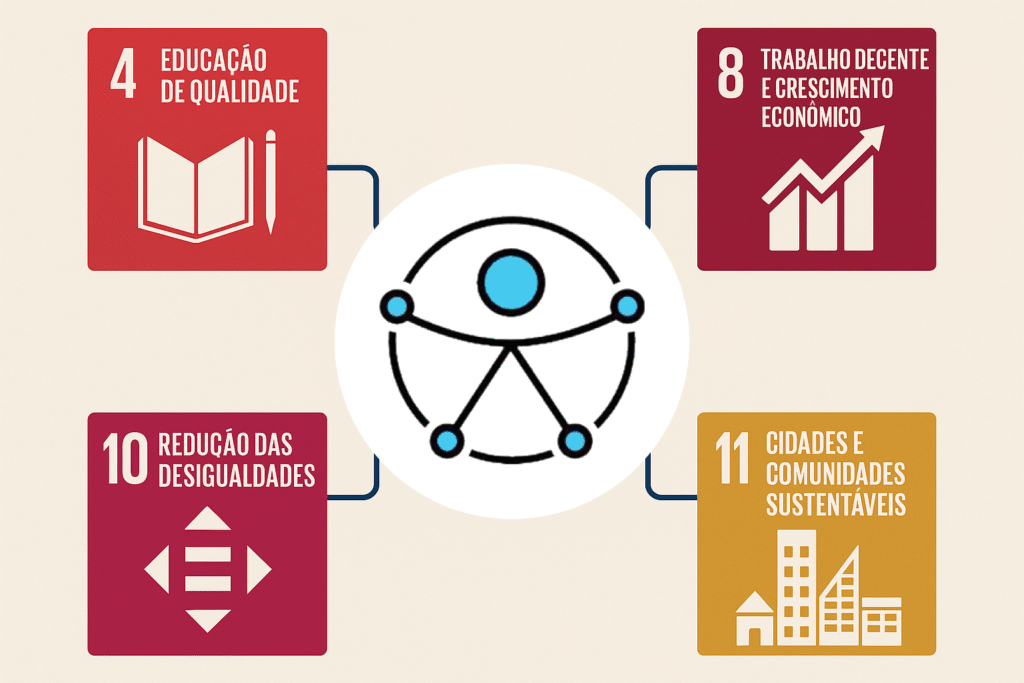
Sustainable development, as defined by the UN, is not only about economic growth but also about reducing inequality and ensuring that everyone has dignified living conditions. In that sense, there is no genuinely sustainable development without the inclusion of people with disabilities. Many of the Sustainable Development Goals have targets relating to this population: quality education for all (SDG 4), inclusive economic growth and decent work (SDG 8), reduced inequalities (SDG 10), sustainable and accessible cities and communities (SDG 11), among others. Meeting these goals means addressing the specific needs of people with disabilities. Countries that invest in inclusive education, urban and digital accessibility, accessible healthcare and job creation for people with disabilities tend to reap rewards on several levels: better social indicators, reduced overall poverty, greater collective well-being and even advances in innovation (since thinking about accessibility solutions often produces products and services useful to the whole population).
An essential point is that including people with disabilities benefits society as a whole. For example, sidewalks with curb ramps benefit not only wheelchair users but also older people, pregnant women, people with strollers and delivery workers with hand trucks. Audiovisual content with captions or sign language interpretation is useful for deaf people and also for anyone who prefers to follow videos without audio on certain occasions. Inclusive workplaces tend to be more welcoming and flexible for all employees, fostering a culture of respect for difference. In this way, promoting accessibility and inclusion ceases to be merely “help for disabled people” and comes to be seen as a social investment with broad returns.
Furthermore, including people with disabilities is fundamental to achieving equity and social justice. Historically, this group was left out of development debates. It is now known that without including them, no society will reach its full development potential. Experts point out that global poverty will not be eliminated if we ignore the millions of individuals with disabilities who remain poor. Modern anti-poverty strategies therefore already incorporate the dimension of disability as a priority. Inclusion means ensuring that public policies, in education, health, employment and housing, have actions directed at this population, tearing down barriers and monitoring results. That integrated approach is what will make development not only rapid but sustainable and resilient, able to withstand crises without leaving the most vulnerable disproportionately behind.
Routes to transforming this picture
Overcoming the cycle of disability and poverty requires coordinated effort from every sector of society. The good news is that there are concrete routes to transforming this picture:
- Improving inclusive public policy: Governments should plan and deliver cross-sector policies, integrating health, education, social assistance, work and transport. Cash transfer or anti-poverty programs need to identify and include families with members who have disabilities, offering supplements (such as assistance to purchase devices or care). Public health plans should prioritize the prevention of avoidable disability (vaccination, quality prenatal care, tackling malnutrition) and early rehabilitation where necessary. Enforcing compliance with the LBI and with employment quotas is also fundamental if rights are to leave the page.
- Investing in universal accessibility: Making physical environments, services and information accessible to everyone. This ranges from adapted urban infrastructure (ramps, accessible transport, adapted restrooms in public buildings) to digital accessibility (government and corporate websites compatible with screen readers, apps with universal design, service through multiple channels including sign language and text). Accessibility should be seen not as a cost but as an investment that allows more people to participate actively in the economy and in public life.
- Education and training from an early age: Ensuring that every child with a disability is in school and learning. This requires identifying needs early (through screening at primary healthcare units, for example), training teachers and providing support resources. In addition, offering accessible vocational qualifications for young people and adults with disabilities, aligning technical courses and apprenticeship places with this group’s needs. Partnerships with specialized institutions can amplify the reach of these programs.
- Inclusive employment and entrepreneurship: Raising awareness among companies and supporting them in hiring professionals with disabilities, going beyond mere quota compliance. This includes offering workplace adaptations, making selection processes more flexible (focusing on skills rather than physical limitations) and publicizing success stories to inspire other companies. At the same time, fostering entrepreneurship with microcredit and mentoring aimed at entrepreneurs with disabilities can generate income and innovation. Fairs and online platforms that showcase products and services offered by people with disabilities help connect these entrepreneurs to consumers.
- Strengthening the support and care network: Many people with disabilities need some level of assistance with daily activities. Valuing and supporting carers (usually family members) through respite programs, guidance and even remuneration can prevent entire families from falling into poverty because of exclusive dedication to a member with a disability. Community services, such as day centers and trained community carers, can share that responsibility, allowing family members to keep jobs and income.
- Cultural change and tackling prejudice: Continuing to raise awareness of the capabilities and rights of people with disabilities. This can be done through media campaigns, by including the subject of disability in school curricula (teaching respect and empathy from an early age), and through the positive visibility of people with disabilities in prominent positions (in sport, media, politics and a range of professions). The more society sees people with disabilities without prejudice, the more support there will be for the measures above and the less discrimination will stand in the way of opportunity.
By following these routes, it is possible to gradually undo the cycle of exclusion and build a virtuous circle, in which inclusion leads to reduced poverty and reduced poverty, in turn, prevents disability and widens inclusion still further. Every small victory, an adapted school, a person with a disability in work, a poor family receiving care support, generates a multiplying positive impact.
The role each of us plays
Breaking the cycle between disability and poverty is not a task for governments or institutions alone: we all have a part in it. It begins with how we see and treat people with disabilities day to day: with respect, equality and support when needed. As citizens, we can demand the enforcement of accessibility laws, report the absence of ramps or reserved spaces, and support projects and NGOs working for inclusion. In the workplace, we can encourage diversity, welcome colleagues with disabilities and dismantle our own prejudices. As educators, we can seek training to include all students better. If we are family or friends of someone with a disability, we can strengthen them in their pursuit of autonomy and opportunity, rather than overprotecting or underestimating them.
Building a more accessible and fairer society depends on empathy and practical action. We need to ask ourselves: what can I do to make my surroundings more inclusive? Sometimes it is a simple gesture, such as making information available in accessible formats, or offering a lift to someone with mobility difficulties. Other times it means greater engagement, such as taking an active part in municipal councils, movements or inclusion initiatives. What matters is not being indifferent.
When we promote the inclusion of people with disabilities, we all gain. Breaking the cycle of poverty and disability means allowing millions of people to develop their potential and contribute economically, culturally and socially. It means more secure families and stronger communities. It means, ultimately, a society that values every individual and leaves no one behind. May the reflection offered by this text inspire action, large or small, and reaffirm that disability should not be synonymous with poverty or exclusion. With awareness, sound policy and everyone’s participation, we can feed a new cycle: one of inclusion and sustainable human development, where dignity and opportunity are a reality for every person.
Make accessibility a decision, not a detail
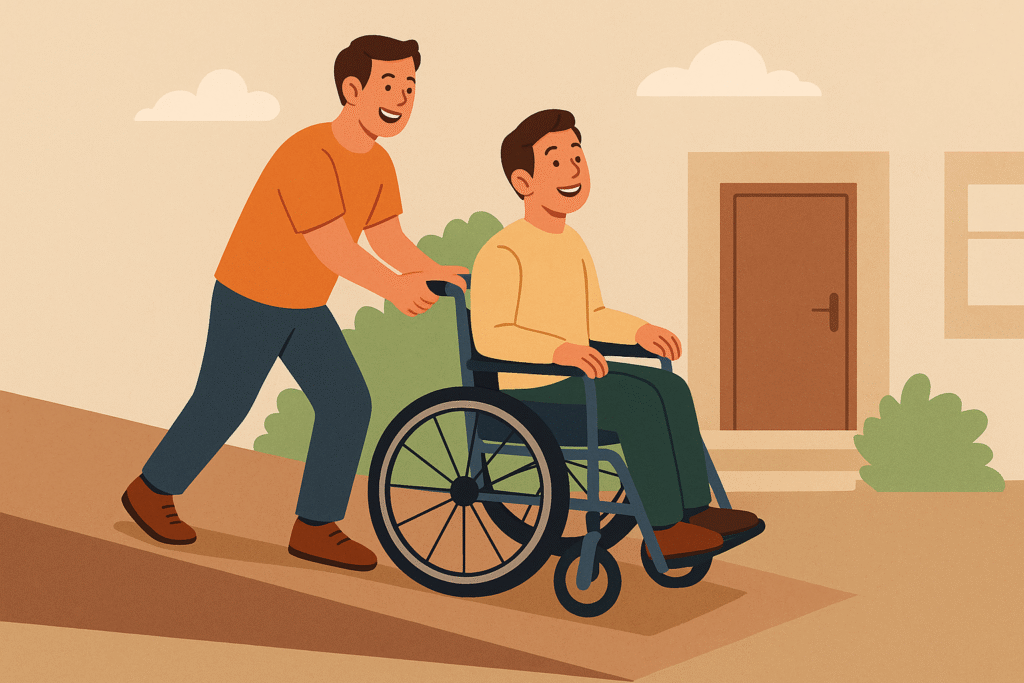
Every accessible building is one less barrier in this cycle.
The Guiaderodas Certification goes beyond a technical checklist. Its methodology combines a detailed assessment of the physical space, the lived experience of people with disabilities, staff training for an accessible attitude and a leadership commitment to continuous improvement.
Learn about the Guiaderodas Certification →